
RESEARCH & ENVIRONMENTAL INTELLIGENCE
Insights
Research on human infrastructure, environmental strain, and the recovery layer inside high-value spaces.
Paikoro studies how physical environments influence attention, trust, sensory load, recovery, retention, and operational resilience. These essays, briefs, and field perspectives are written for decision-makers who understand that environment is not background. It is part of performance.

MED SPA WHITE PAPER
Recovery Infrastructure for Premium Med Spas
High-cortisol clients are moving through fluorescent, hard-surface, clinically lit spaces that extend stress, suppress discretionary spend, and weaken rebooking at the exact moments when trust and ticket size should peak.
This white paper outlines Paikoro’s solution through the Paikoro Concept Audit and subsequent recovery infrastructure plan. Med spa operators learn exactly where their post-treatment experience breaks, how to correct it with targeted biophilic interventions, and how that translates into higher retention, larger average tickets, and stronger referral velocity.
HEALTHCARE WHITE PAPER
Why Healthcare Organizations Need Environmental Strain Diagnosis, Recovery Infrastructure Mapping, and Implementation Direction
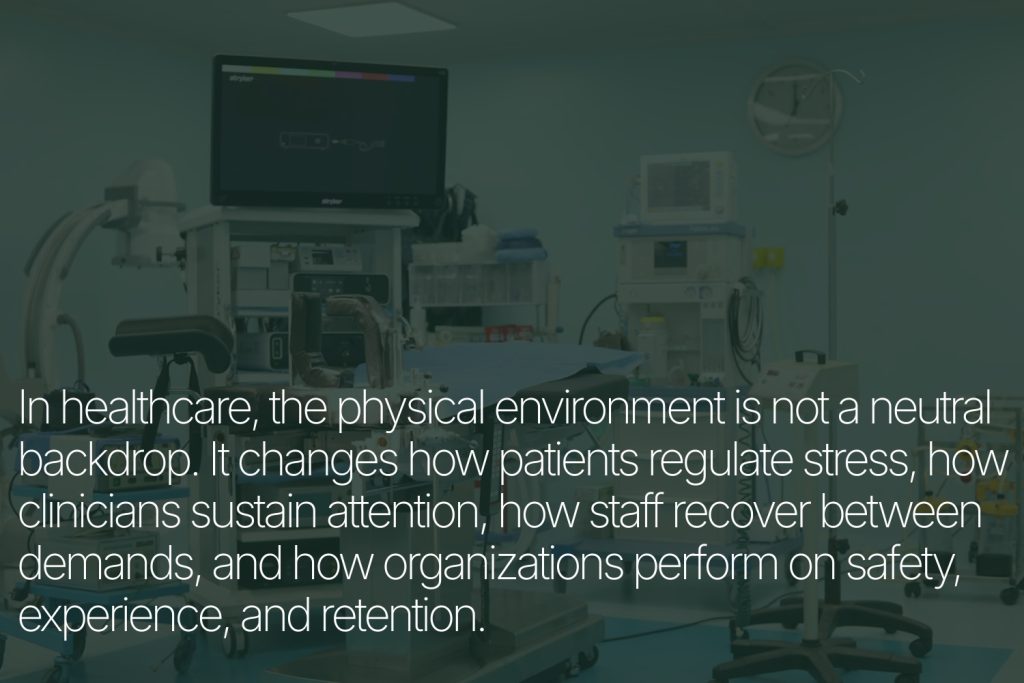
Premium care can still take place inside a draining environment.
Waiting-room tension, abrupt procedure exits, staff fatigue, harsh lighting, exposure, noise, and poor post-service recovery conditions do more than create discomfort. They shape trust, perception, workflow, emotional regulation, and the felt quality of care.
This paper explains why clinics, med spas, dental practices, and care-adjacent organizations need a clearer method for identifying where environmental strain is accumulating, where recovery is missing, and how implementation direction can convert a premium promise into a premium physical experience.
AI ERA WHITE PAPER
Human Infrastructure in the AI Era
Why Machine-Optimized Workplaces Are Creating Cognitive, Retention, and Operational Risk
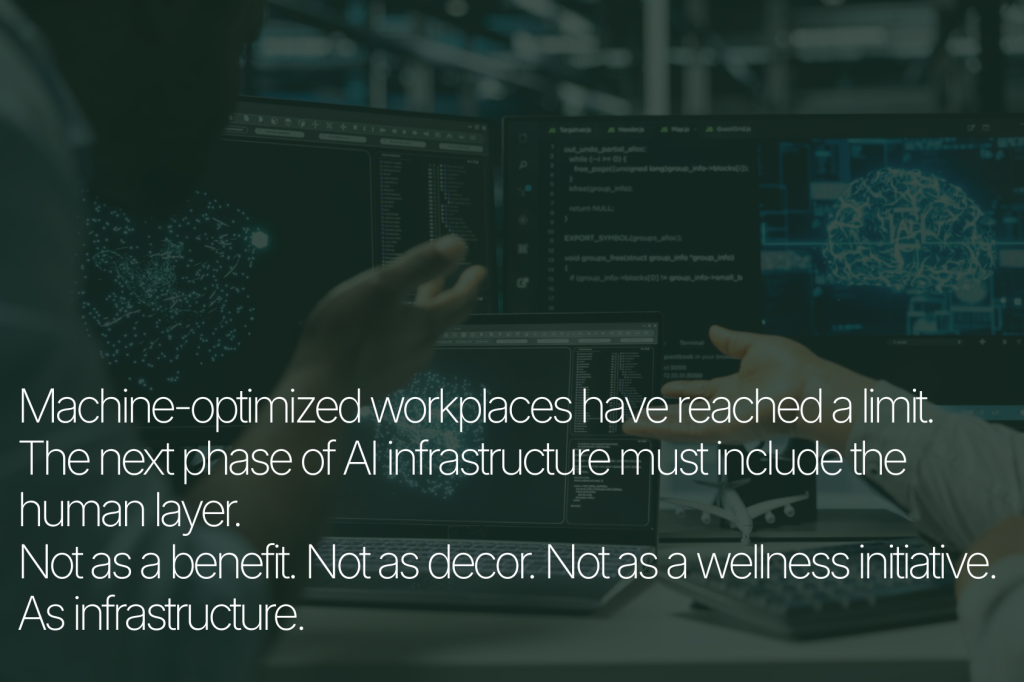
AI infrastructure is advancing through speed, density, redundancy, and machine protection. But many organizations are still treating the human layer as an afterthought. The result is a widening mismatch between what the environment demands and what people can biologically sustain.
This paper examines how screen load, acoustic pressure, sealed interiors, thermal discomfort, artificial lighting, reduced daylight, and limited recovery space quietly degrade cognition, judgment, stability, and long-term workforce resilience.
RESEARCH THEMES
Areas of ongoing environmental systems exploration.
Paikoro research does not treat environment as mood or decoration.
It examines how space, sequence, material conditions, and sensory inputs shape human function across care, service, hospitality,
and machine-intensive work.
Cognitive Sustainability
How environments influence resilience over time, not just comfort in the moment.
Environmental Cognition
The effect of layout, light, acoustics, thermal conditions, and density on cognitive stability.
Sensory Regulation
How overload accumulates when spaces lack credible thresholds, relief, and recovery logic.
Machine-Driven Workplace Systems
Environmental strategies for machine-intensive operations where human performance is still mission-critical.
EDITORIAL POSITION
This is not generic wellness content.
It is category-building work around the missing recovery layer in
premium spaces.
Paikoro writes for owners, founders, operators, clinical leaders, hospitality teams, and designers who need a more serious language for what environments do to people. The goal is to make strain visible, define where recovery belongs, and give organizations a stronger basis for spatial decisions.
STRATEGIC INQUIRY
Technical infrastructure is evolving faster than human environments.
Paikoro research explores how environmental systems can better support cognition, recovery, trust, sustained attention, and long-term human stability inside demanding spaces.